
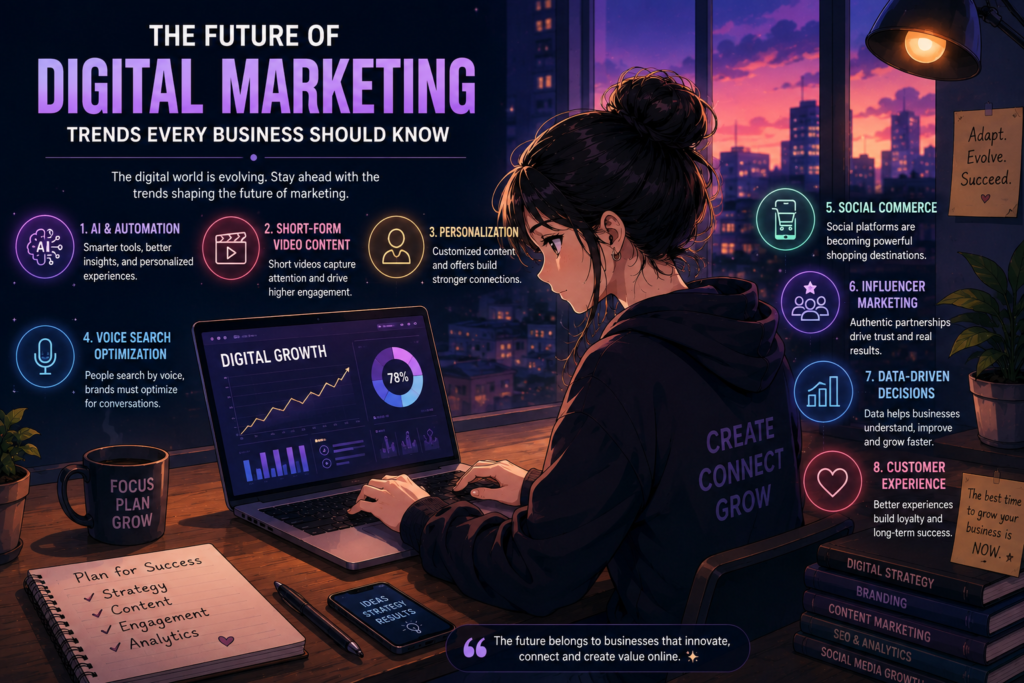
The Future of Digital Marketing: Trends Every Business Should Know
Digital marketing is evolving faster than ever. As technology advances and customer behaviour changes, businesses must adapt their marketing strategies to remain visible, competitive, and connected with their audience.
From artificial intelligence and personalized content to short-form videos and voice search, the future of digital marketing is creating new opportunities for businesses of every size.
1. Artificial Intelligence Is Transforming Marketing
Artificial Intelligence, commonly known as AI, is changing how businesses create content, understand customers, and improve marketing campaigns.
AI-powered tools can help businesses analyse customer behaviour, generate content ideas, automate repetitive tasks, and deliver more personalized experiences.
For example, chatbots can provide quick customer support, while AI-based analytics can help marketers understand which campaigns are performing well.
However, successful marketing still requires human creativity, emotional understanding, and strong brand communication. AI works best when it supports human ideas rather than replacing them.
2. Short-Form Video Content Will Continue to Grow
Short videos have become one of the most effective ways to capture audience attention. Platforms such as Instagram Reels, YouTube Shorts, and other video-based platforms allow businesses to share useful and engaging content quickly.
Businesses can use short-form videos to:
- Showcase products
- Share customer reviews
- Explain services
- Provide helpful tips
- Show behind-the-scenes content
- Highlight brand stories
Creative and authentic videos often perform better than highly polished advertisements because they feel relatable and easy to understand.
3. Personalization Is Becoming More Important
Customers expect brands to understand their interests and provide relevant experiences.
Personalized email campaigns, product recommendations, targeted advertisements, and customized content can make communication more useful for customers.
Instead of sending the same message to everyone, businesses can create different content for different audience groups. This can improve engagement and help businesses build stronger customer relationships.
4. Voice Search Is Changing SEO
Voice assistants and voice-enabled searches are changing how people find information online.
People often use longer and more conversational questions when speaking. For example, instead of typing:
“Best digital marketer Kozhikode”
A person may ask:
“Who is the best digital marketer near me?”
Businesses can prepare for this change by creating clear, natural, and question-based content. Adding frequently asked questions to websites can also improve visibility for conversational searches.
5. Social Commerce Is Making Online Shopping Easier
Social media is no longer only a platform for communication. It is becoming an important space for product discovery and online shopping.
Customers can discover products through videos, influencer content, advertisements, and brand pages. Businesses can use social platforms to guide customers from product discovery to purchase.
For small businesses, social commerce creates an opportunity to reach customers without depending only on a traditional online store.
6. Influencer Marketing Is Becoming More Authentic
Influencer marketing is moving toward genuine relationships and trusted recommendations.
Many businesses are now working with micro-influencers and local content creators who have smaller but highly engaged audiences. These collaborations can feel more personal and relevant.
The success of influencer marketing depends on choosing creators whose values and audience match the brand.
7. Data-Driven Marketing Will Improve Decision-Making
Digital marketing provides valuable information about customer behaviour and campaign performance.
Businesses can track:
- Website visits
- Content engagement
- Advertisement performance
- Customer enquiries
- Conversion rates
- Audience interests
Using this information helps businesses improve campaigns and make better marketing decisions.
Data should not only be collected—it should be understood and used to create meaningful improvements.
8. Customer Experience Will Become a Major Priority
Customers remember how a brand makes them feel. A fast website, clear communication, helpful support, and easy navigation can create a positive customer experience.
Businesses that focus on customer needs are more likely to build trust and encourage repeat purchases.
Digital marketing is not only about attracting new customers. It is also about creating experiences that encourage customers to return.
Conclusion
The future of digital marketing will be shaped by technology, creativity, personalization, and meaningful customer experiences.
Businesses that adapt to new trends while maintaining a clear and authentic brand identity will have stronger opportunities for growth. Artificial intelligence, short-form video, social commerce, voice search, and data-driven strategies will continue to influence how brands communicate online.
The most successful businesses will not simply follow every trend. They will choose the right digital strategies, understand their audience, and create valuable experiences that build long-term relationships.