
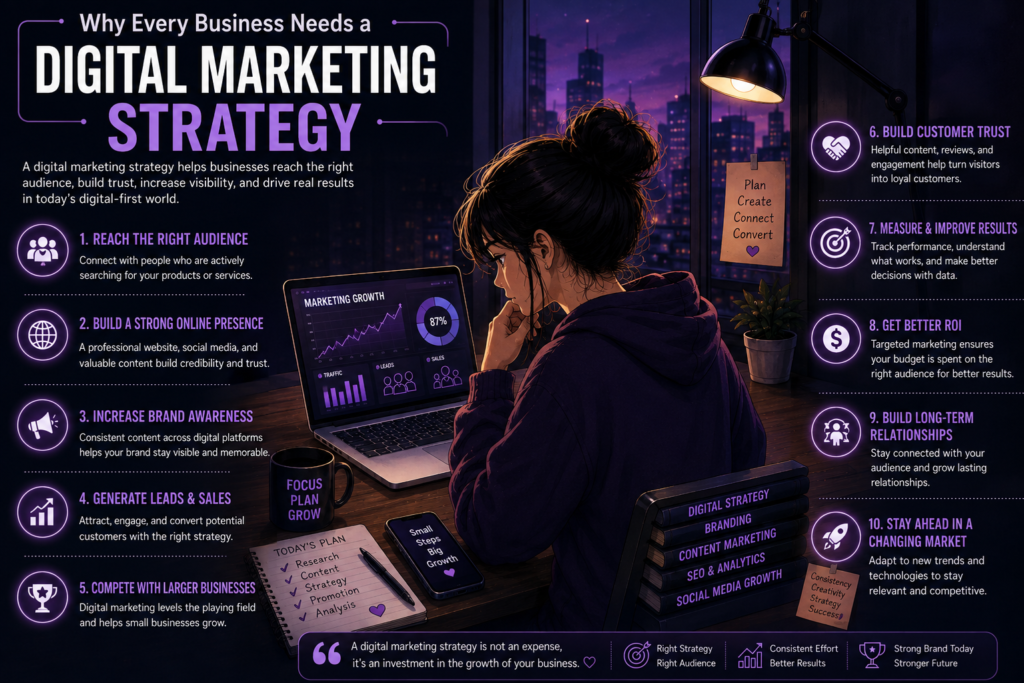
Why Every Business Needs a Digital Marketing Strategy
In today’s digital-first world, having a great product or service is no longer enough. Customers are spending more time online searching for information, comparing brands, reading reviews, and making purchasing decisions. This is why a strong digital marketing strategy has become essential for businesses of every size.
Whether you run a small local business, a growing startup, or an established company, digital marketing can help you reach the right audience, build trust, and achieve sustainable growth.
What Is a Digital Marketing Strategy?
A digital marketing strategy is a planned approach to promoting a business through online channels. It involves understanding your target audience, setting clear goals, choosing the right platforms, creating valuable content, and measuring results.
A successful strategy can include:
- Search Engine Optimization (SEO)
- Social Media Marketing
- Content Marketing
- Paid Advertising
- Email Marketing
- Website Marketing
- Online Reputation Management
- Performance Marketing
Instead of randomly posting content or running advertisements, a strategy helps businesses use their time and budget more effectively.
1. Reach Your Target Audience
One of the biggest advantages of digital marketing is the ability to reach specific audiences.
Traditional advertising often reaches a broad audience, but digital platforms allow businesses to target people based on factors such as interests, location, age, online behavior, and search intent.
For example, a local business can focus its marketing efforts on customers in a specific city or area instead of spending money trying to reach people who are unlikely to become customers.
2. Build a Strong Online Presence
Customers often search for a business online before making a decision. Your website, social media profiles, Google Business presence, and online content all contribute to how people perceive your brand.
A consistent digital presence helps your business look professional, trustworthy, and accessible.
Your online presence should clearly communicate:
- What your business offers
- Who you serve
- Why customers should choose you
- How customers can contact you
3. Increase Brand Awareness
People need to see and interact with a brand multiple times before they remember it.
Digital marketing gives businesses many opportunities to stay visible through social media posts, videos, blogs, search results, advertisements, and email campaigns.
Consistent and valuable content can help turn an unfamiliar business into a recognizable brand.
4. Generate More Leads and Sales
Digital marketing is not just about getting likes and followers. A well-planned strategy should ultimately support business growth.
SEO can bring people who are actively searching for your products or services. Social media can create engagement and interest. Paid advertising can reach potential customers quickly, while email marketing can nurture existing leads.
When these channels work together, they can create a stronger path from awareness to conversion.
5. Compete With Larger Businesses
Digital marketing has created opportunities for small businesses to compete with larger companies.
A small business can build a strong online presence through high-quality content, local SEO, social media engagement, and targeted advertising without requiring the massive budgets associated with traditional advertising.
With the right strategy, creativity and consistency can become powerful competitive advantages.
6. Build Customer Trust
Trust plays an important role in purchasing decisions.
Customers want to know that a business is reliable and professional before spending their money. Useful content, customer reviews, testimonials, informative websites, and active social media profiles can help establish credibility.
Instead of simply telling customers that your business is good, digital marketing allows you to demonstrate your expertise and value.
7. Make Data-Driven Decisions
Another major benefit of digital marketing is measurable performance.
Businesses can track metrics such as:
- Website traffic
- Search rankings
- Social media engagement
- Ad performance
- Leads generated
- Conversion rates
- Customer behavior
This information helps businesses understand what is working and what needs improvement.
Rather than relying entirely on guesswork, you can use real data to make smarter marketing decisions.
8. Get Better Value From Your Marketing Budget
Digital marketing offers flexible options for businesses with different budgets.
You can start with organic strategies such as SEO, social media, and content marketing. You can also invest in paid campaigns and adjust your spending based on performance.
This flexibility makes digital marketing particularly useful for small and growing businesses that need to carefully manage their marketing budgets.
9. Build Long-Term Customer Relationships
Digital marketing is not only about attracting new customers. It is also about maintaining relationships with existing ones.
Social media, email newsletters, educational content, and personalized communication can keep your brand connected with customers even after a purchase.
Strong customer relationships can encourage repeat purchases, referrals, and long-term loyalty.
10. Stay Relevant in a Changing Market
The digital world is constantly changing. New platforms, technologies, customer behaviors, and marketing trends continue to emerge.
Businesses that actively adapt their digital strategies are better positioned to remain visible and competitive.
A digital marketing strategy gives your business a framework for testing new ideas, analyzing results, and adapting to changes in the market.
How to Create a Digital Marketing Strategy
Creating a strategy doesn’t have to be complicated. Start with these simple steps:
1. Define your goals
Decide what you want to achieve—more website traffic, leads, sales, brand awareness, or customer engagement.
2. Understand your audience
Identify who your ideal customers are, what they need, and where they spend their time online.
3. Choose the right channels
You don’t need to be everywhere. Focus on the platforms and marketing channels that are most relevant to your audience.
4. Create valuable content
Share content that educates, solves problems, answers questions, and demonstrates your expertise.
5. Measure your results
Track your performance regularly and identify which strategies are producing the best results.
6. Improve continuously
Digital marketing is an ongoing process. Test, analyze, improve, and repeat.
Final Thoughts
A digital marketing strategy is no longer an optional extra for businesses—it is an important part of building a strong and competitive brand.
From increasing visibility and attracting the right audience to generating leads and building long-term customer relationships, digital marketing can support businesses at every stage of growth.
The key is not simply to be online, but to have a clear strategy behind everything you do.
Your business has a story to tell. A strong digital marketing strategy helps make sure the right people see it.
🚀 Ready to Grow Your Business Online?
Take your digital presence to the next level with the right strategy, creative content, and performance-focused marketing.